


The Difference Between Procurement and Supply Chain Management (SCM)
PROCUREMENT TIPS&TRICKSSUPPLY CHAIN MANAGEMENT
Dan Solomon
4/6/20251 min read
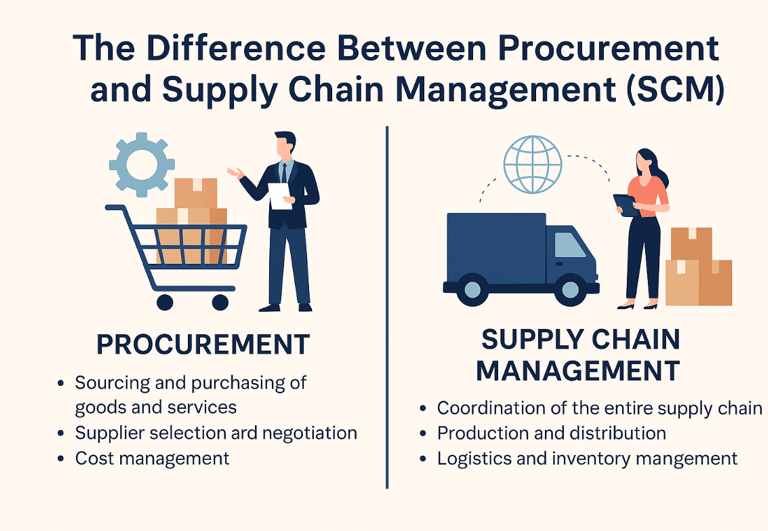
Procurement and Supply Chain Management (SCM) are two essential functions in any organization dealing with goods, services, or production. Although they are closely related and often overlap, they serve distinct purposes within the business operation. Understanding the difference is crucial for business leaders, operations managers, and entrepreneurs who want to improve efficiency, reduce costs, and build resilient operations.
What is Procurement?
Procurement refers to the process of identifying, sourcing, and acquiring the goods and services an organization needs to function. It includes everything from identifying suppliers, negotiating contracts, purchasing, and ensuring the timely delivery of goods.
Key activities in procurement include:
• Supplier evaluation and selection
• Price and contract negotiations
• Purchase order management
• Invoice and payment processing
What is Supply Chain Management (SCM)?
Supply Chain Management is a broader concept that includes procurement but extends beyond it. SCM involves the end-to-end management of the flow of goods, information, and finances from raw material suppliers to the end customer.
Key components of SCM include:
• Demand planning and forecasting
• Logistics and transportation
• Inventory and warehouse management
• Coordination between suppliers, manufacturers, and retailers
Key Differences Between Procurement and SCM
While procurement focuses on purchasing inputs, SCM focuses on the entire journey from supplier to customer.
Here is a brief comparison:
Conclusion
Procurement and Supply Chain Management are both vital to an organization's success, but they serve different purposes. Procurement ensures that you get the right goods at the right price, while SCM ensures that these goods reach the customer efficiently and on time. A strong understanding of both functions can lead to significant competitive advantages.
Procurement
Supply Chain Management
Focuses on purchasing goods and services
Tactical and operational
Concerned with supplier management and cost savings
Manages the entire flow of goods, services, and information
Strategic and end-to-end
Concerned with efficiency, coordination, and customer satisfaction
FFM TRADE e.U.
Hadikgasse 64, 1140 Vienna, Austria
REQUEST A CONTACT:
info [at] ffmtrade.eu
+43 660 682 70 75
© 2026. FFM TRADE e.U. - All rights reserved.


D-U-N-S®-Number: 300829100